New 30.12 General Permit Status, NR 320 Administration
Crystal VonHoldt
2984 Shawano Avenue
Green Bay, WI 54313
[email protected]
Even though the public comment period for proposed WDNR administrative rules on placement of habitat structures in navigable waters has passed, our Walleye Restoration Foundation, Inc., would like to make comments regarding habitat not addressed in your efforts. Please consider our comments below.
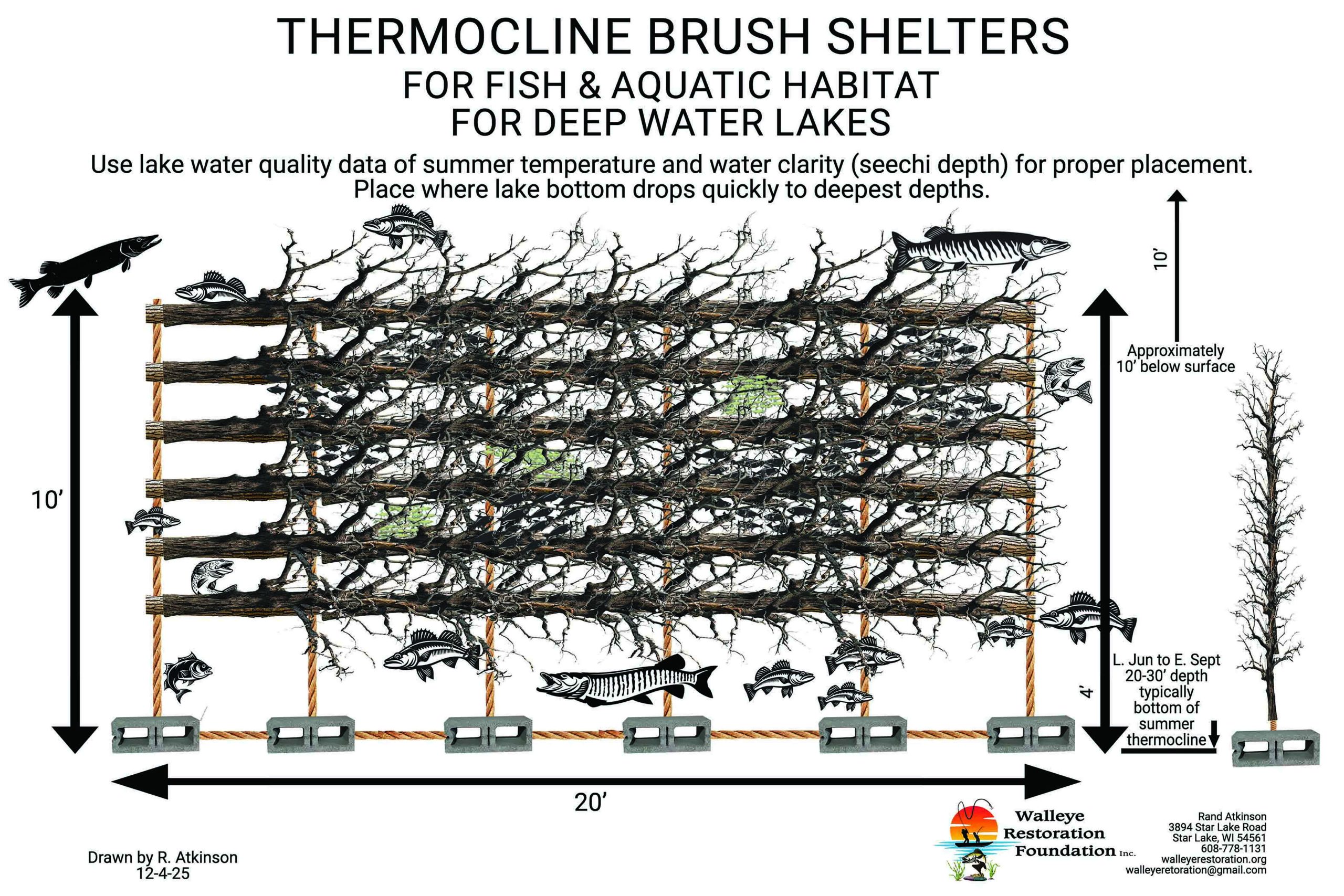
We are suggesting that fish and aquatic habitat placed in deep water at the summer thermocline in the deeper water lakes of the Northern Forest (and perhaps other deep water lake locations) would be both beneficial to the fishery and organisms that support them addressing ecologically both habitat protection and water quality.
This habitat would restore the woody debris that was historically present before logging and disturbance of our natural lakes by human activities important for fish cover year-round and for small fish food organisms at time of post larval fingerling feeding. This habitat would mainly be made of native tree and shrub flora resistant to decay combined with inert materials for lasting an extended period without maintenance. Its base would be located near the bottom of the recognized summer thermocline and the top of the habitat at least 5 feet below the water surface for navigational clearance.
I expect the department might expect that this habitat might be covered under your new proposed WDNR-GP6-2026 as a “Fish Habitat Structure” yet it’s location and use would be more important to the public rights that the Department is meant by law to protect and uphold, therefore potentially exempt from your proposed administrative rules.
Our Walleye Restoration Foundation, Inc. mission approaches restoration ecologically to include: 1.) Making corrections in conservation management practices that have caused this failed recruitment, 2) Developing and implementing of practices in lakes and waterways to restore healthy fisheries and make improvements to water quality, and 3) Education of sportsmen, legislators, fishing and sporting suppliers, natural resource personnel and students, lake dwellers/ educators, and the general public to support the above activities.