WDNR Denied Permitting of Walleye Restoration Foundation Portable Shoreline Fish Hatchery Stocking of Presque Isle Lake
Hello Walleye Restoration Foundation Supporters,
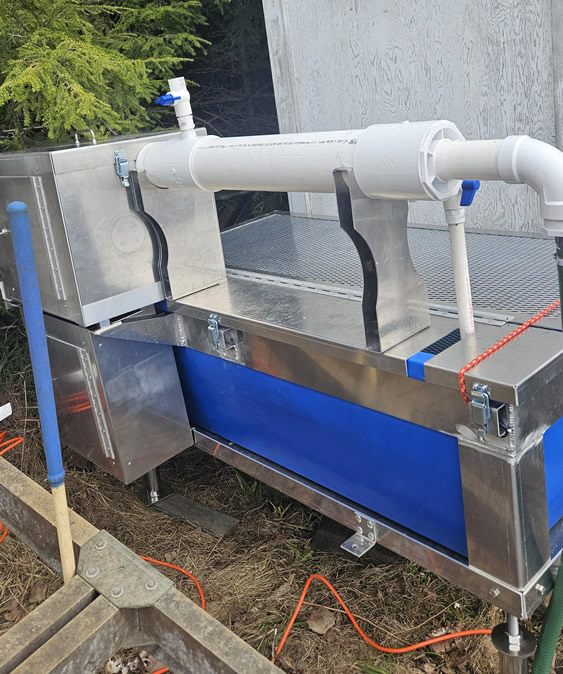
PORTABLE Shoreline Fish Hatchery ( PSFH)
I am writing you this email to bring you up to date on our process of following through with the operation of our Portable Shoreline Fish Hatchery (PSFH) and deep water habitat return of hatched post larval fingerlings.
Three days ago I received a letter in the mail rejecting our application to “stock” larval fingerlings back into Presque Isle Lake. Our effort is not a typical “stocking” fish management protocol as expressed in the 2022 Walleye Management Plan. Our PSFH operation and distribution of post larval fingerlings in the lake of origin to deep water habit addresses two ecological and fish management concerns:
- The imprinting of fish to return to their spawning site upon maturity, and,
- increasing the survival rate of young-of-the- year (YOY, Age 0) to be recruited into a fishable population.
What lakes and aquatic systems is the Foundation targeting in our efforts? We have spent the last two years reviewing WDNR and GLIFWC fisheries databases and the soil/hydrology mapping in the watershed headwater areas of Vilas and Oneida Counties. The lakes our Foundation will consider for placement of our PSFH and habitat initiatives are ones that have both surveyed and unsurveyed walleye populations AND spawning habitat that would be suitable for walleye spawning. Natural reproducing lakes with surveyed populations that do not have defined sustainable/fishable adult fish and low recruitment of young-of-the-year are part of this consideration.
Another important consideration is the geographic location of the lake in the watershed. Lakes in the upper watershed with outlet streams to lakes and waterways below are a priority to consider in our restoration efforts and recognizes the WDNR Genetic Management Units. In this era of barriers of dams, both human constructed and by beavers, migration of fish upstream is limited. Increased walleye and fish populations in headwater lakes have potential to move downstream through these barriers.
Presque Lake headwater system where we have chosen to pilot our PSFH system meets the criteria we have discussed above. The WDNR denial of our “stocking” application of Presque Isle Lake on grounds that there is a sustainable naturally reproducing population already when their own surveys and their criteria that defines sustainable walleye indicates a different scenario. They further state that stocking natural reproducing waters can be “potentially harmful” and “inefficient”. Our guidelines and methods DO NOT follow the “stocking” definition that they themselves have not followed.
Please consider the attached document that recognizes 37 lakes in Vilas and Oneida Counties that were identified by the WDNR as natural reproducing lakes that were stocked (predominantly from their own WDNR Woodruff hatchery). This document also shows population survey data of adult walleye populations before and after stocking and a trend of declines in populations after stocking. There should be an obvious concern of the current fish management practices that are not improving or sustaining walleye populations in our Northwoods lakes.
Again, the initiatives of the Walleye Restoration Foundation on Presque Isle Lake using the methods described are pioneer efforts to solve our deteriorating walleye populations. We are asking for both WDNR and GLIFWC support and cooperation in our efforts, not a denial of them. Please consider donating to our efforts.